Under Armour House of Sports and Digital Showrooms
More than a rack of samples.
For decades, the showroom worked in pretty much the same way. Racks of samples, a buyer with a season to fill, and a product left to do all the talking, one hanger at a time.
Under Armour’s new global headquarters sits on the Baltimore Peninsula, on land once home to industrial shipping yards. Designed by Gensler, the five-story mass-timber building shares its campus with a track-and-field stadium.
Inside, the banners at reception already announce the next season, because in this business the next season is always the one that counts. The House of Sports brings that season’s product and digital storytelling into one space, so partners can wander through the brand’s entire product landscape instead of flipping through it. The Digital Showrooms in Amsterdam, Seoul and Shanghai follow the same idea, each in a room of its own.
What we built
Four rooms, one system
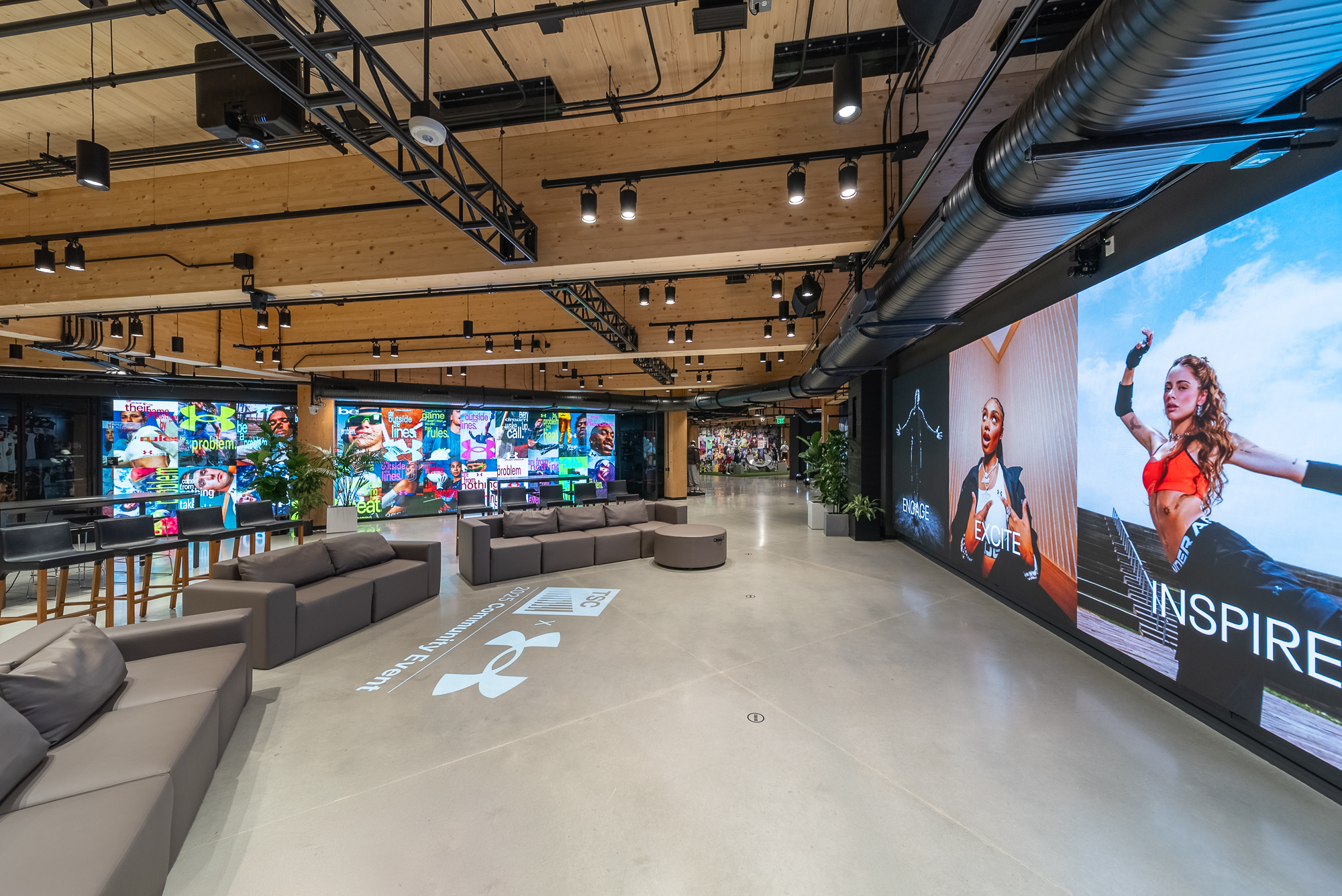
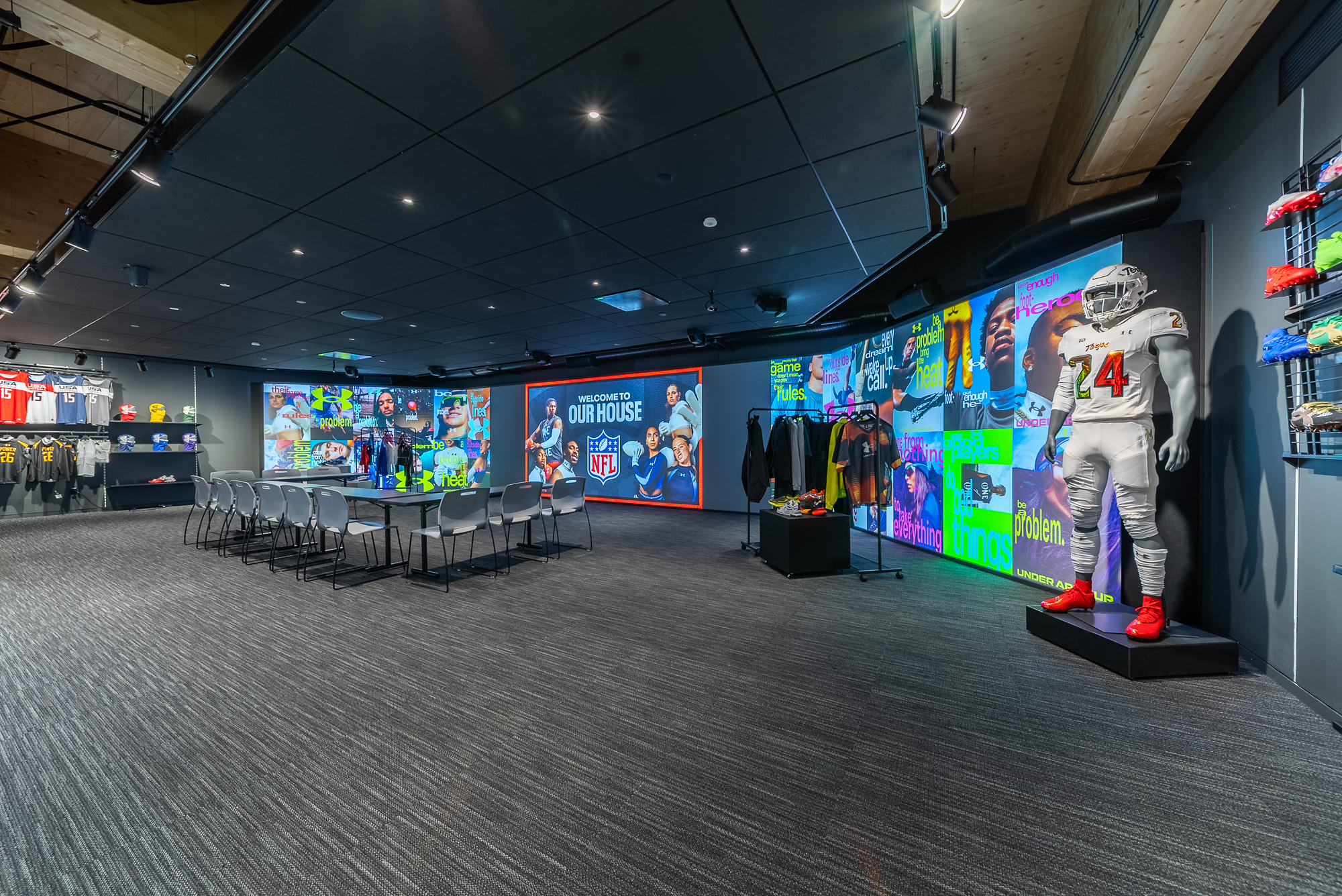
No two of the four rooms are the same. Baltimore is the newest and the biggest, redesigned from scratch when Under Armour moved into its new headquarters. Each room has at least one large projection wall, so content can travel from one city to the next. In Baltimore and Amsterdam the projection wraps around three sides. In Seoul and Shanghai it runs along one long wall.
Baltimore
We designed the House of Sports around game day. Unite and Ignite was the concept line, and the visit plays out like a match. It starts with the story: a wall that sets up the season’s product. Then you get your head in the game. Then comes the arena, the big space in the middle where everyone gets pumped up. From there, partners split off into the breakout rooms, which we called the plays, for the smaller, real conversations. And in the locker room, Under Armour tells the more personal stories about its athletes and collaborations.
Under Armour has made the space its own since then. Some zones have new names, some are used differently. That was always the idea: a game plan, not a script.
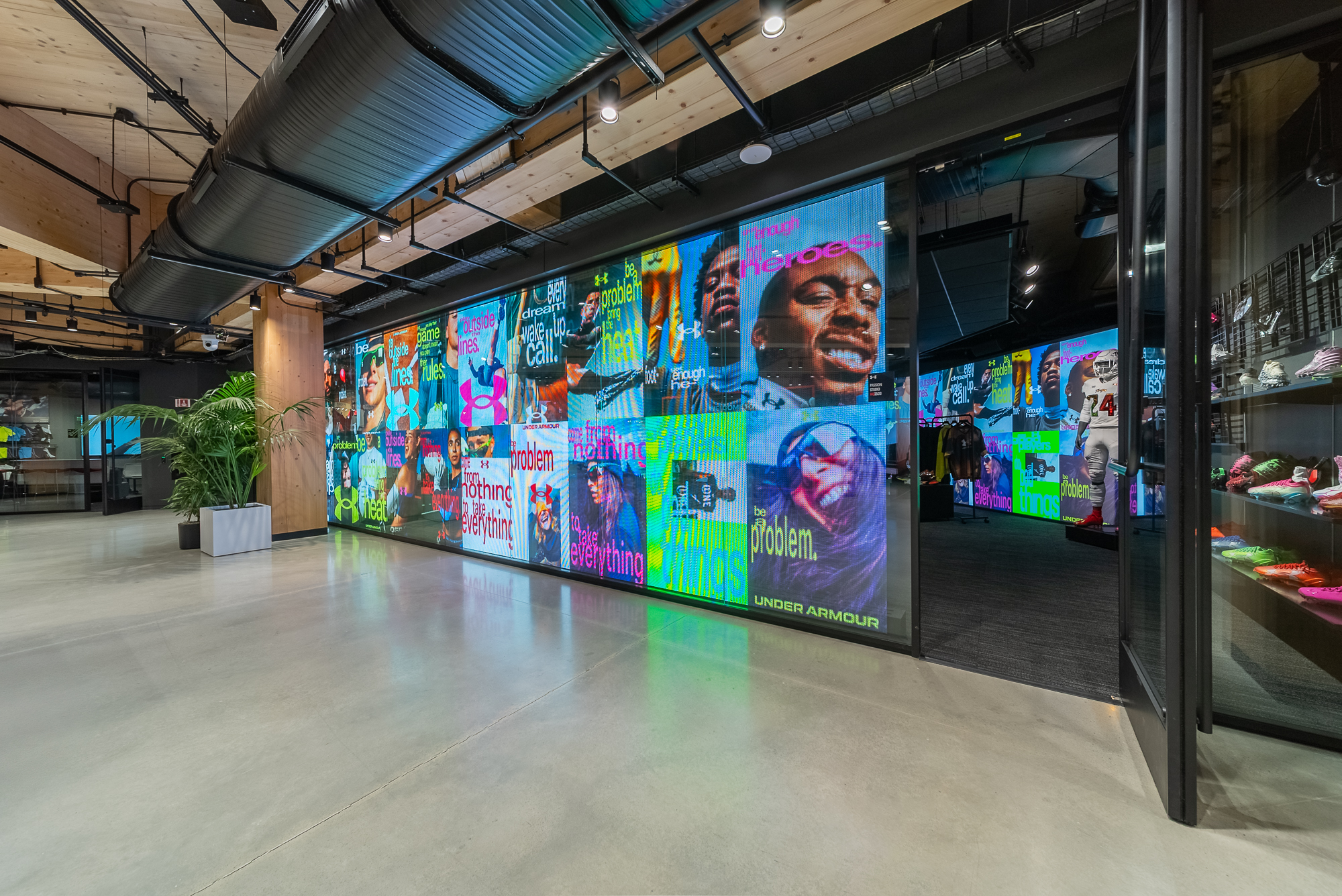
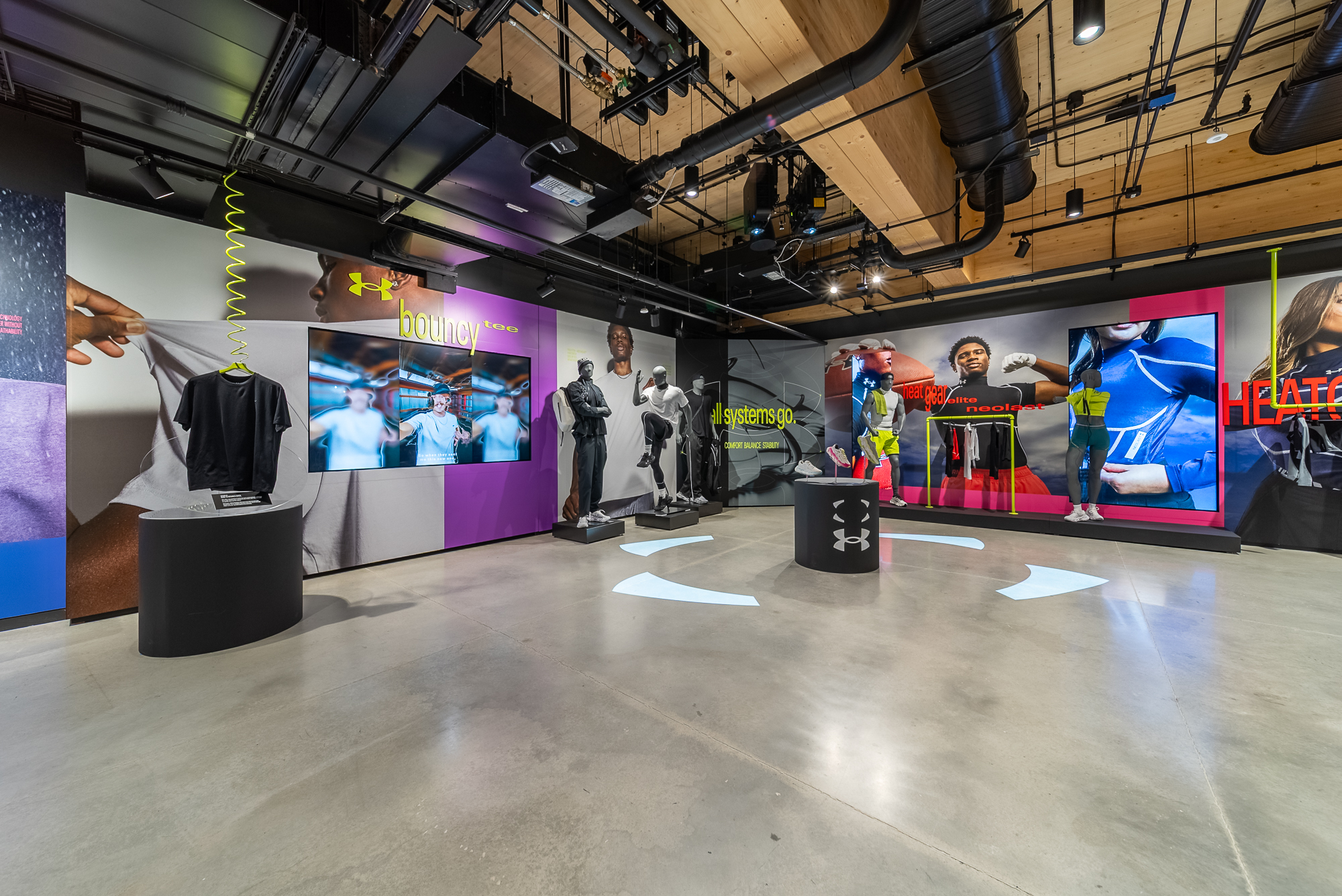
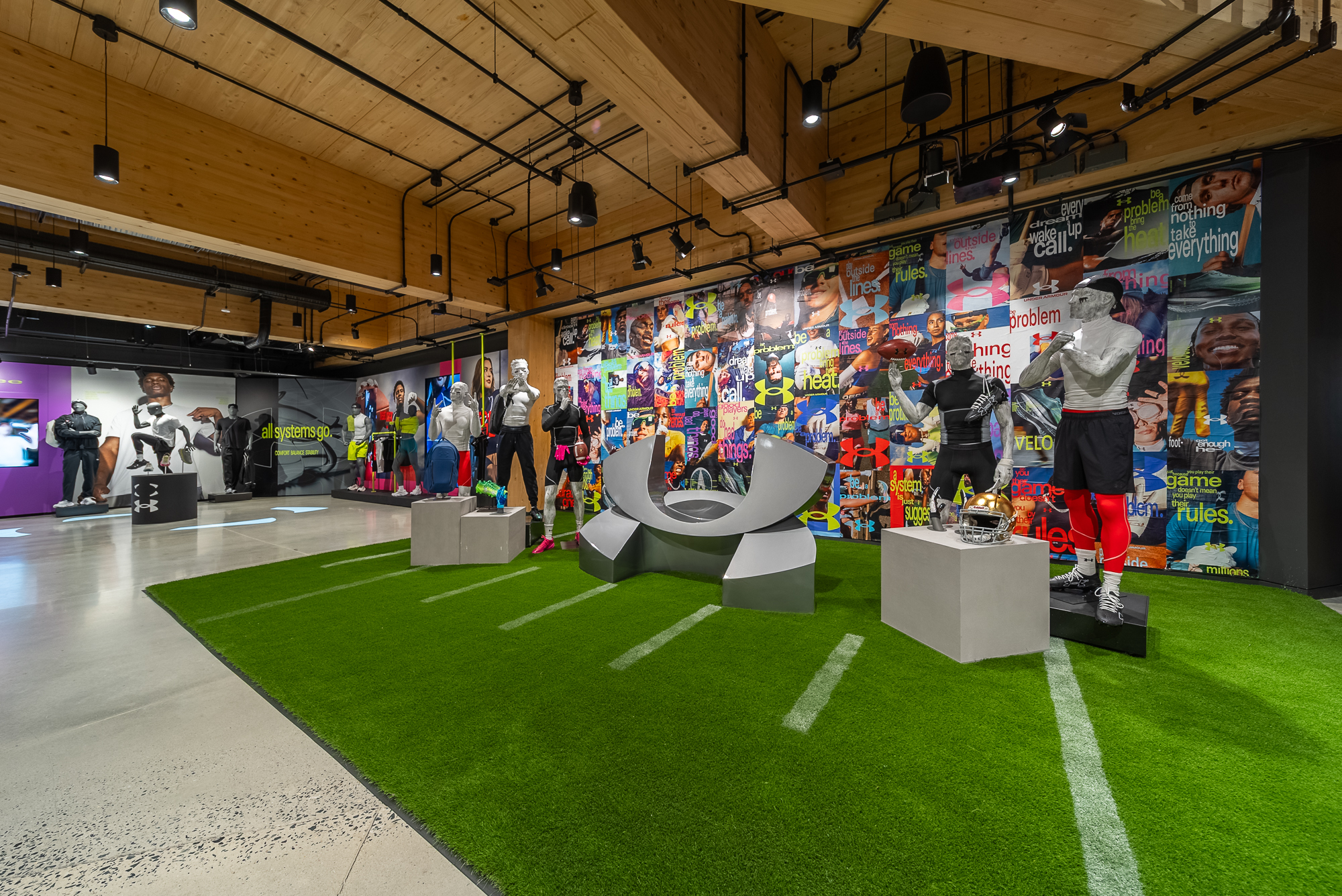
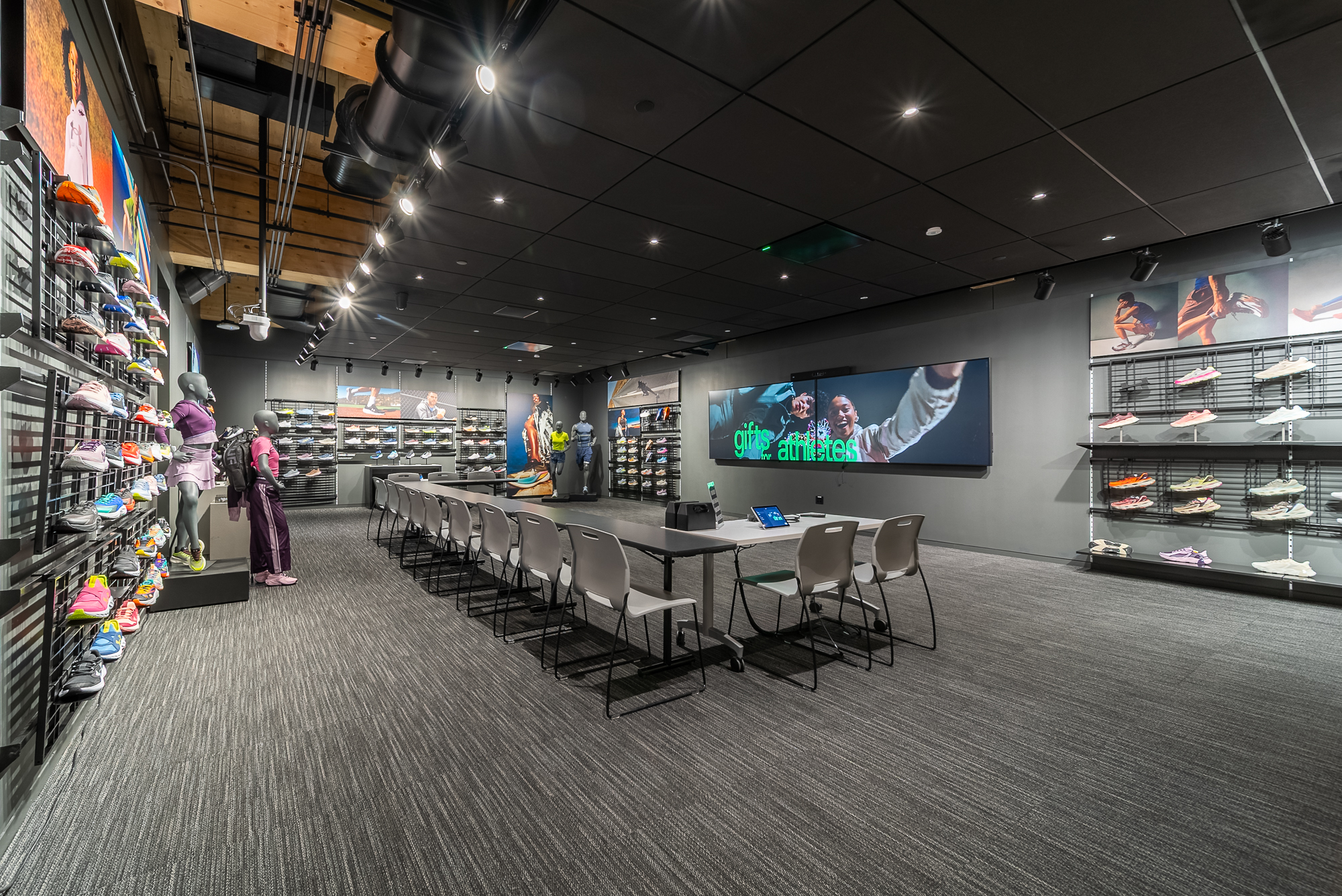
Here’s what you’ll find there today. Under the timber ceiling, the showroom unfolds in chapters. There’s a turf field with yard lines, a logo sculpture and mannequins in football gear. There’s a running zone lined with shoes, with a long meeting table down the middle, a golf corner, and a training zone where projected light circles a single shirt on a plinth. In between, glass walls double as transparent LED surfaces, with Protect This House scrolling along their lower edge.
In motion
The biggest screen stretches along the central lounge. One minute it plays campaign imagery. The next, it opens the retail planning tool Under Armour works with, and a complete store appears in 3D. Partners and Under Armour’s own teams walk through it, on the wall or in a VR headset: which piece hangs where, and how the store should flow. Along the way, displays show the day’s meeting schedule, so partners always know where they’re headed next.
The space works hard for its square meters. Selling-season meetings with accounts, internal decisions, campaign launches, recordings with local news, visits from the athletes Under Armour sponsors. Same room, different day.
The software
All of it runs on The Storytelling Suite (TSS), our in-house software. With one platform across four cities, every Under Armour team works from the same stories. Global messaging stays consistent, and each location can still adapt content to its local market. One brand on three continents, speaking to every local audience.
The content
We make the content, too. Every season starts with a briefing. We produce the immersive videos and build templates in TSS, and Under Armour’s teams fill them for each season, market and product. We build the backbone, they make it local. In an industry where products change faster than most signage, that counts for plenty.
The challenge
The puzzle: make a sports brand’s entire range tangible in four cities on three continents, without ending up with four slightly different versions of the brand. Not just for buyers, but for partners, sponsors, athletes and local news crews. And keep it fresh, because the next season is always around the corner.
The racks are still there. They just don’t have to do all the talking anymore.
Image carousel
Credits
THE STORYTELLING COMPANY
Concept & Design
Concepting, Design, Immersive Experiences, House of Sports Baltimore
Engineering & Delivery
Engineering, Delivery, House of Sports Baltimore
Software & Product
The Storytelling Suite
Content Production
Immersive Videos, TSS Templates, Seasonal Content
Customer Success & Support
Customer Success, Support