Paul Kalkbrenner
A camera on his hands, every night he plays.
Paul Kalkbrenner plays live. He builds his sets on the spot, and no two nights come out the same.
Lovely for the audience, tricky for anyone designing visuals. You can’t run a timed sequence behind an artist who decides in the moment how long a track lasts. So for Parts of Life we stopped trying to predict him and pointed a camera at him instead. That system is still on the road with him today.
What we built
Parts of Life
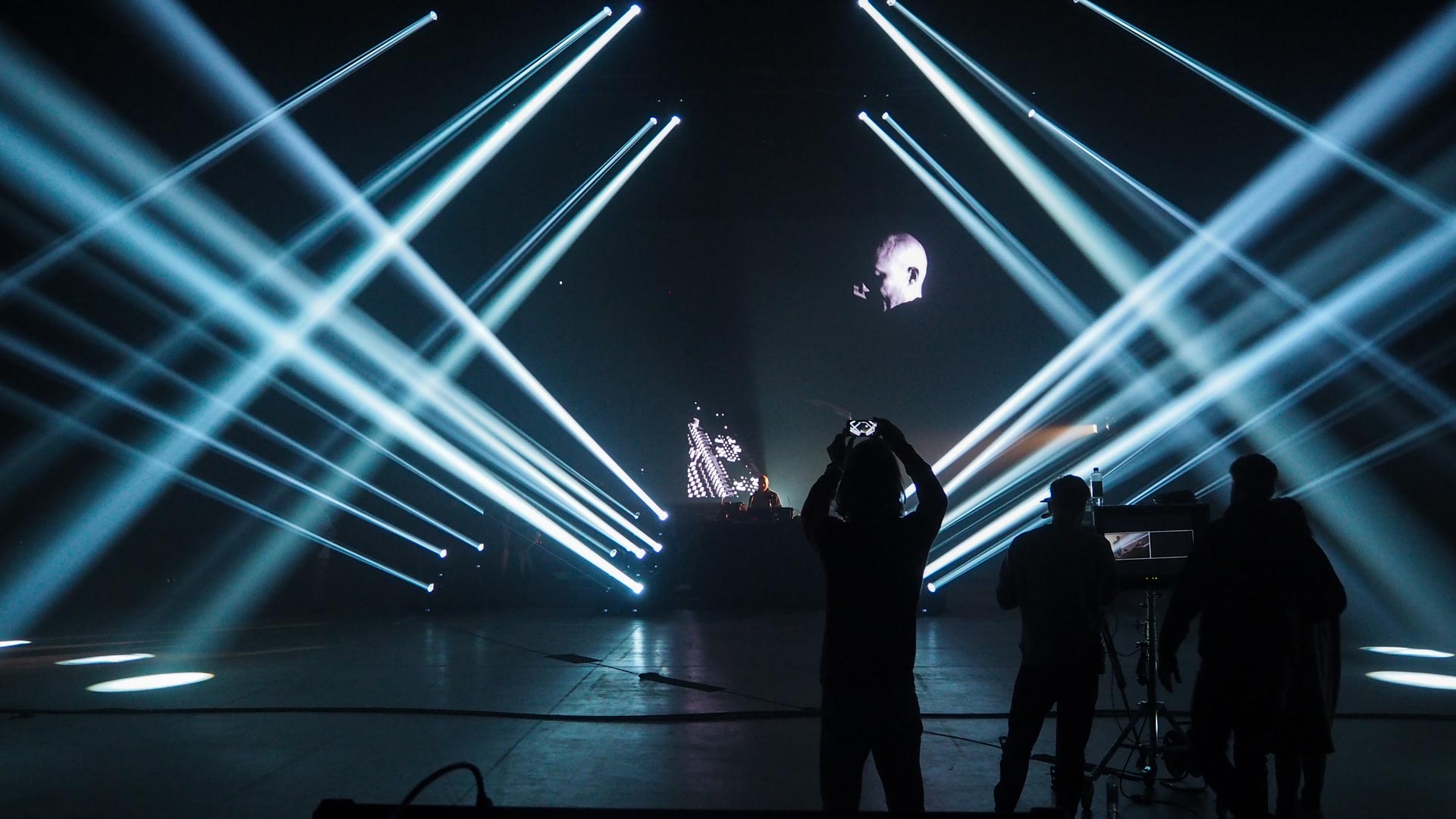
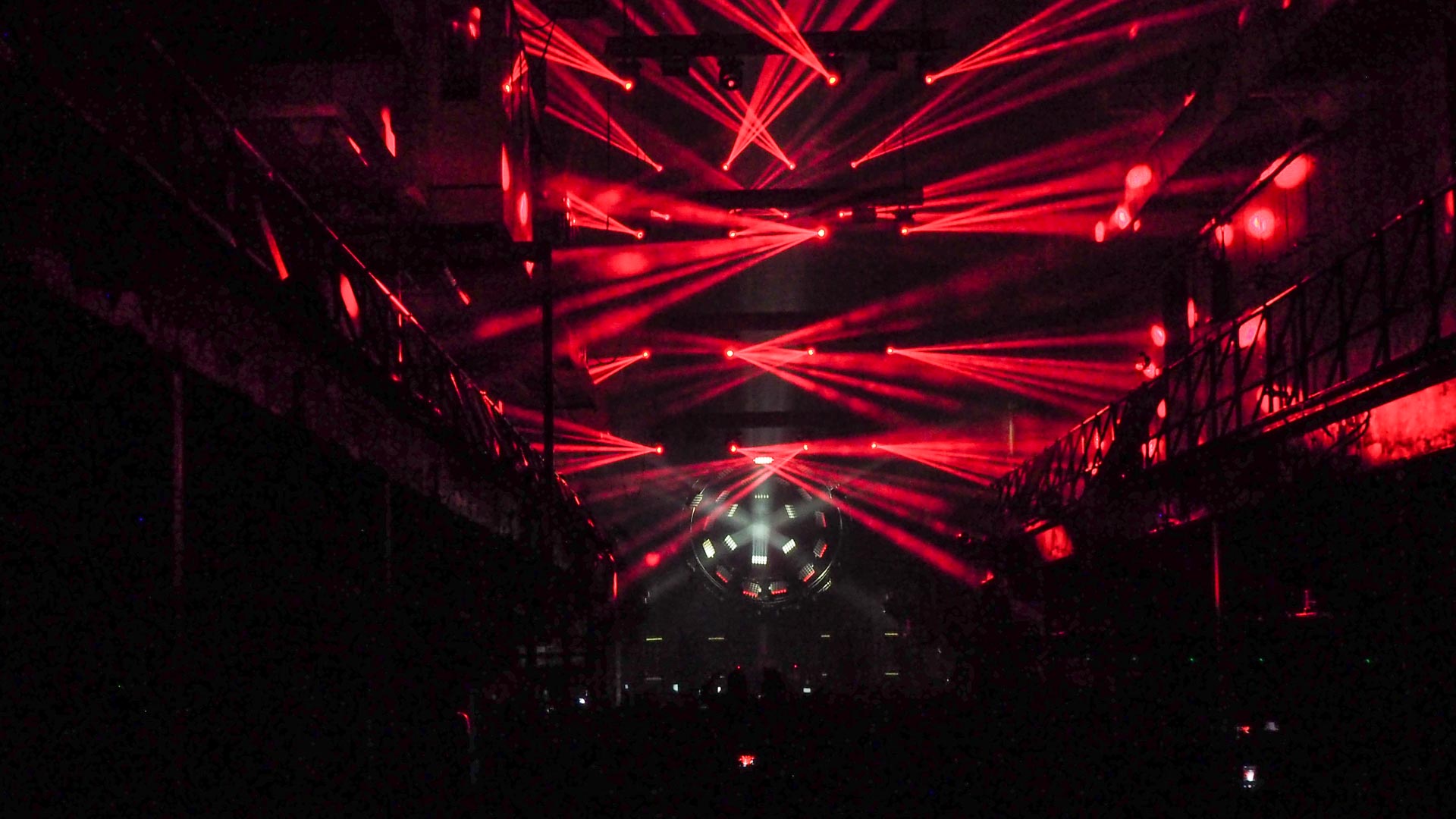
The starting point was Kalkbrenner himself: the most interesting thing on that stage is a man making music with his hands. So we designed the whole tour around it, from 2D graphics to 3D set design. Cameras film him at his setup while he plays. In TouchDesigner, the footage is composited live with generated visuals and shown behind him in real time, tied into the light design. Suddenly, row 30 had the view from row one. Because the visuals come from what he does, not from a timeline, they keep up with every change he makes. The system launched with the Parts of Life album in 2018 and is still part of his live show today.
Part Three and Part Eight
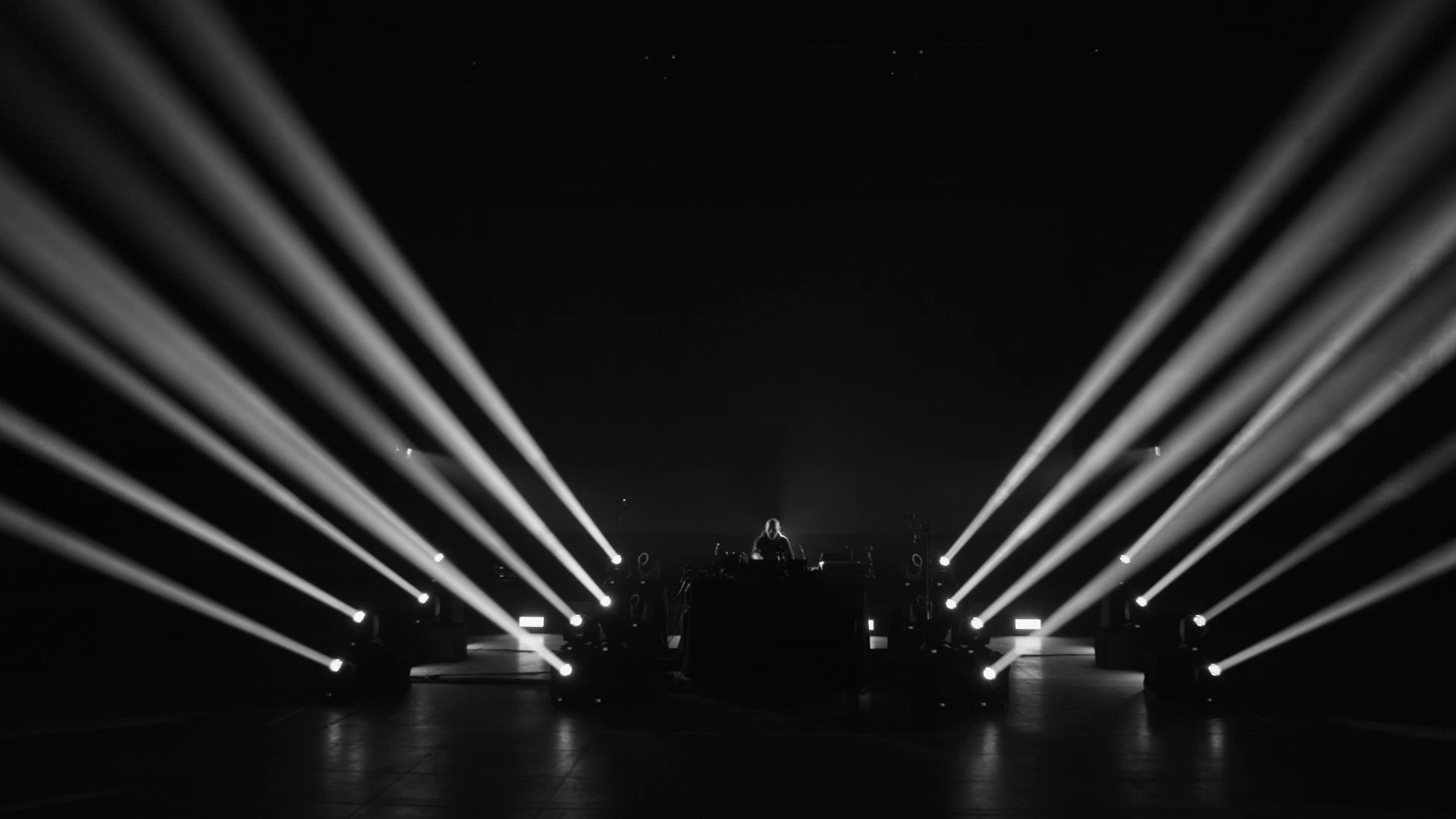
Two music videos grew out of the same idea, both in black and white, both showing him doing the one thing he does: playing live. Part Three puts him at his desk in a pitch-black room, lit by geometric light that moves with the music. Part Eight leaves him alone on the rooftop of Kraftwerk Berlin, filmed by drone, playing to a city that can’t hear him.
Where it started: Back to the Future
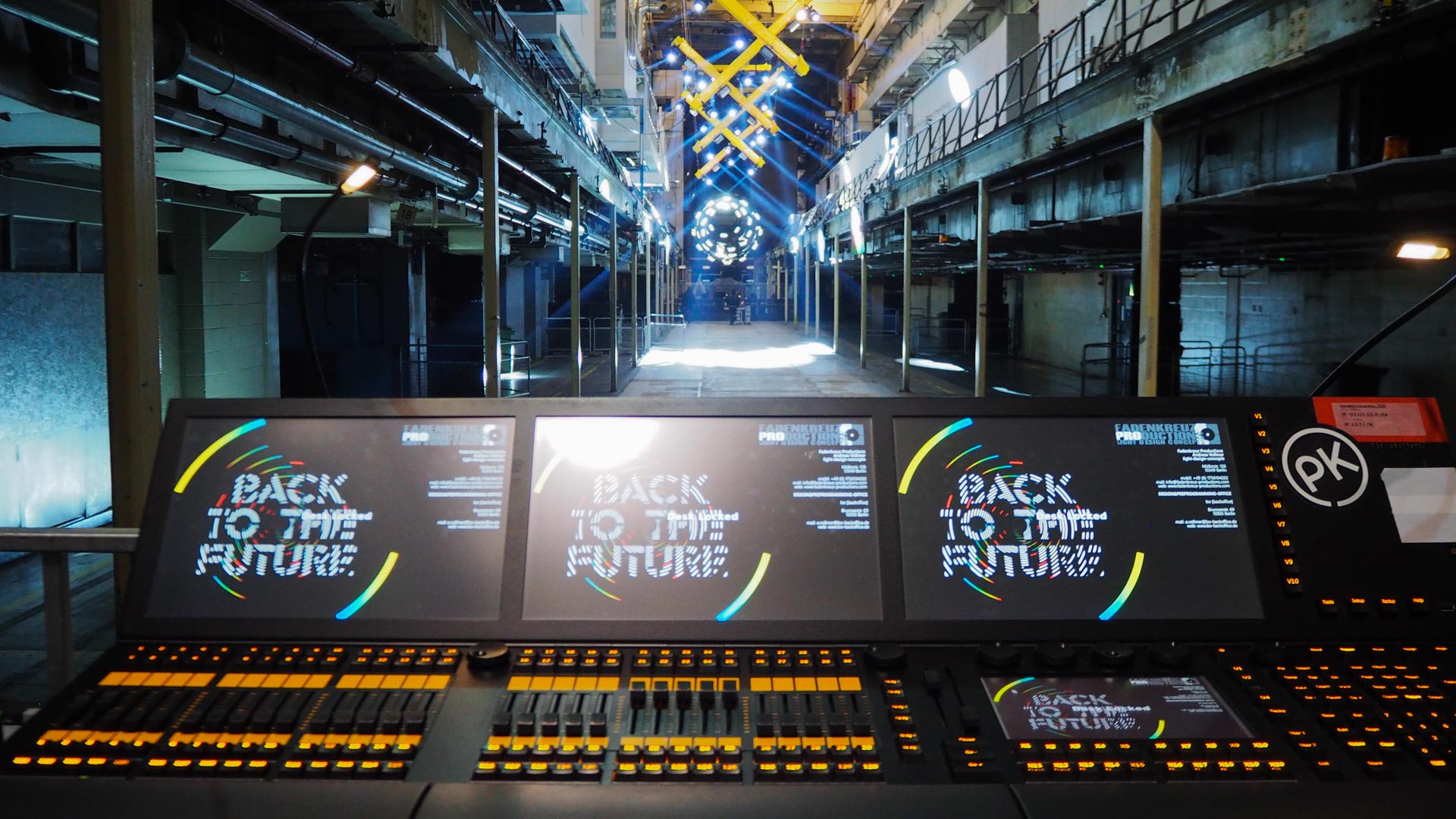
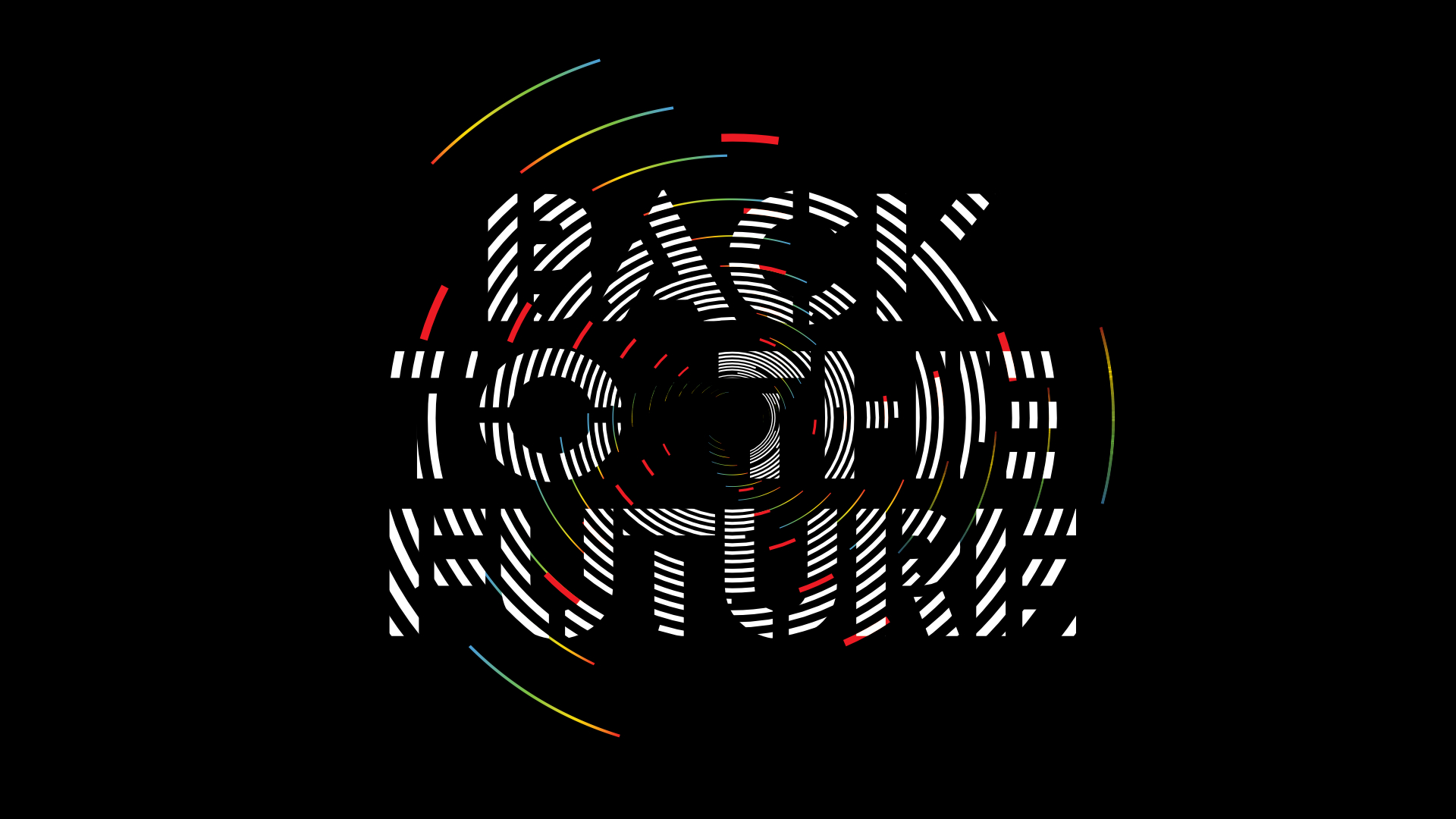
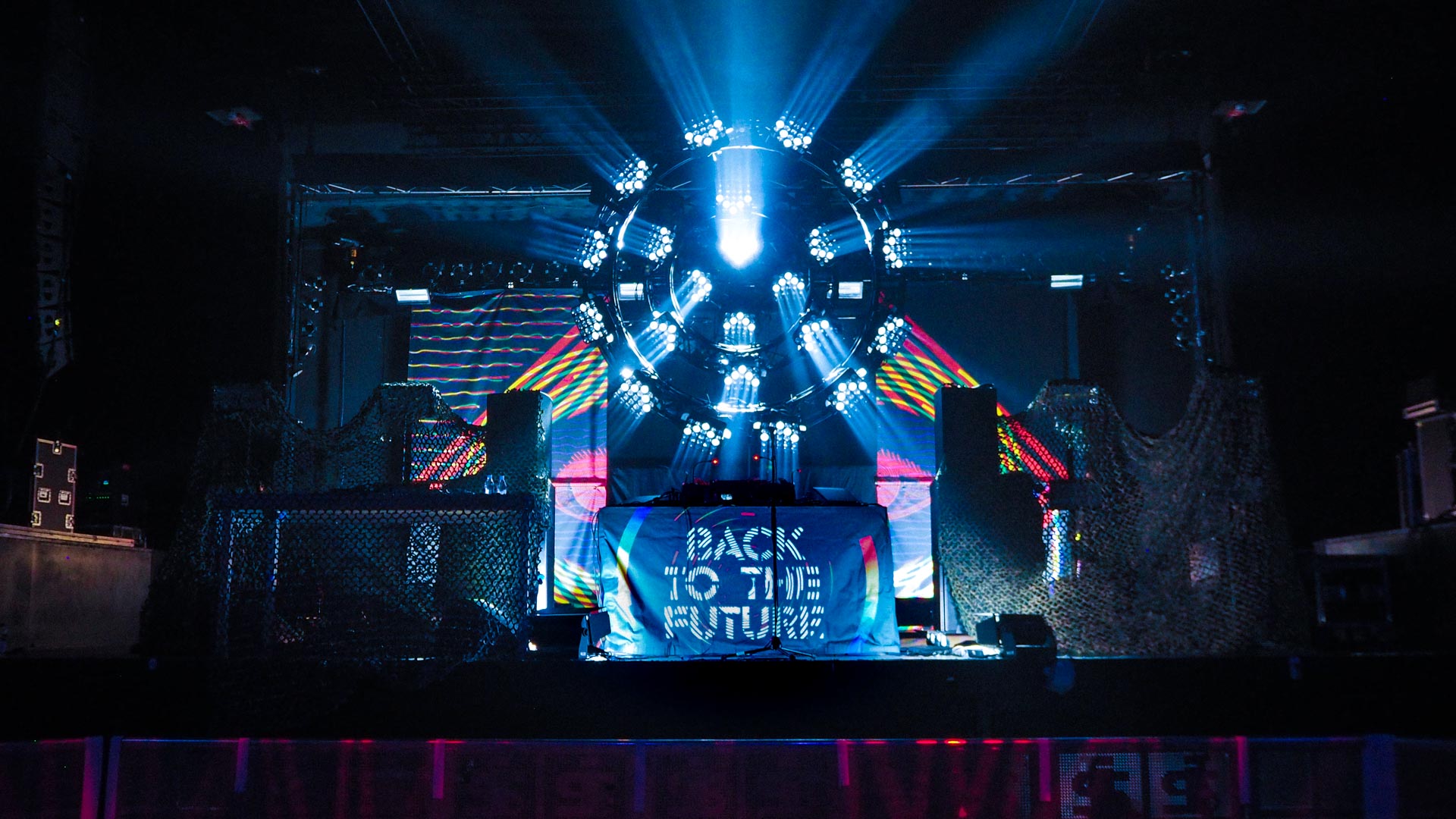
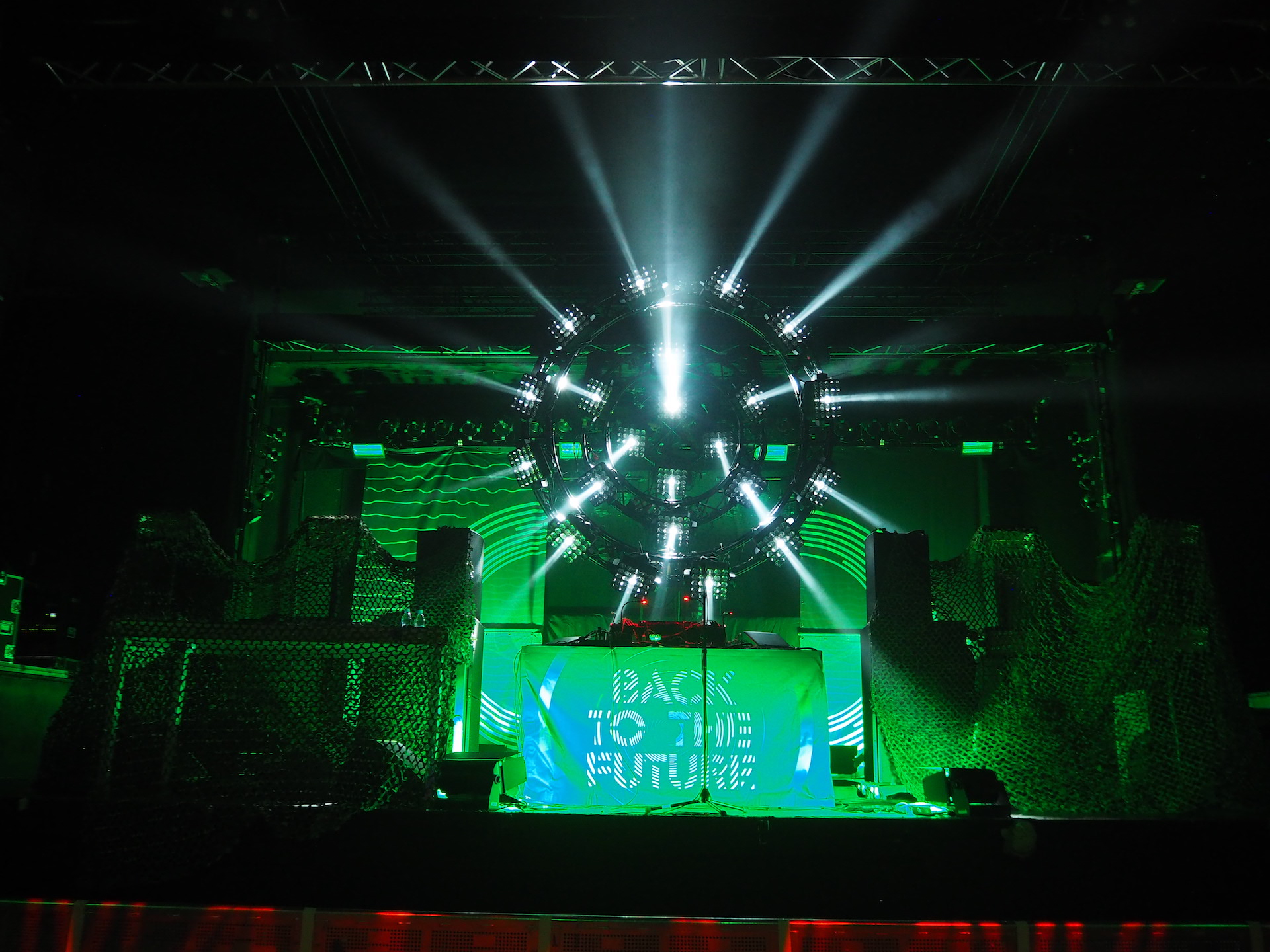
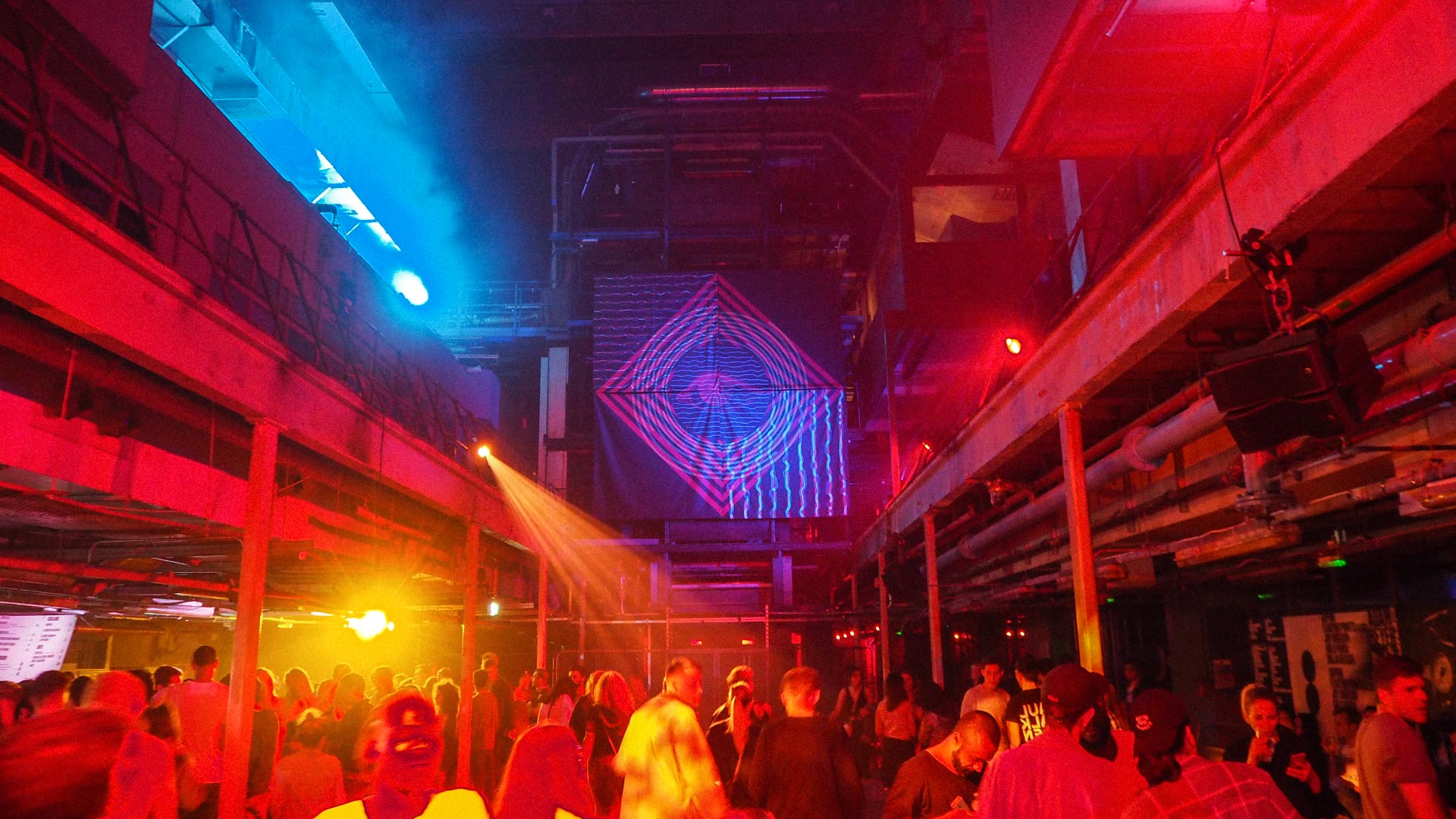
Before Parts of Life came time travel. Kalkbrenner had dug through thousands of tracks from 1987 to 1993, the music that reached East Berlin when he was growing up, and turned them into a mixtape trilogy. The tour opened at the Columbiahalle in Berlin on 7. April 2017. We designed it in the visual language of the era, RGB bit graphics and monochrome light, running on current event tech. At its center stood The Tunnel, a custom light installation on a 25 x 25 pixel grid that handled simple spotlights as happily as bit graphics. Behind it, a modular RGB banner changed its look with every light setting. Modular because it had to be: the tour kept visiting venues it had never seen before.
The identity
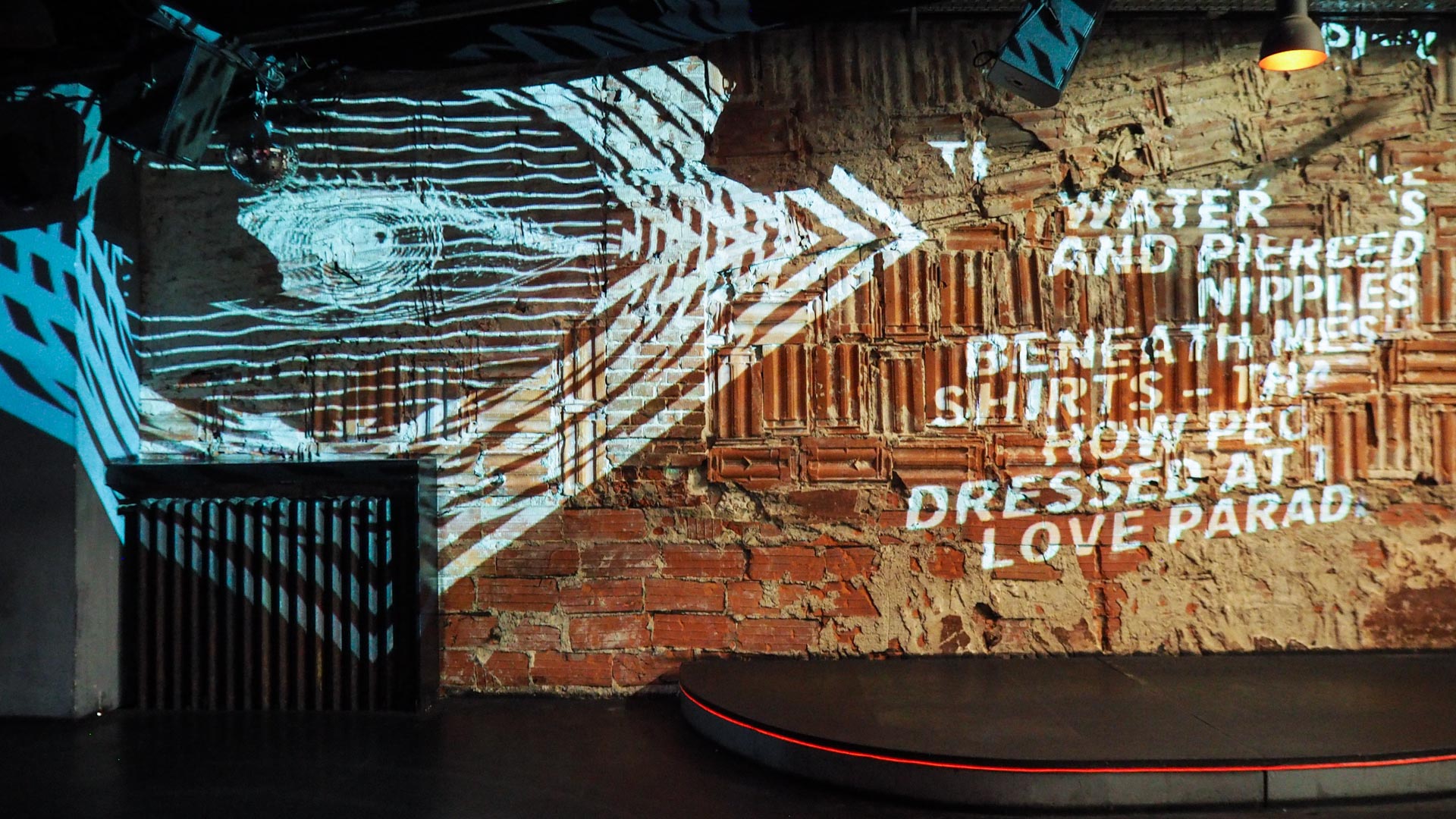
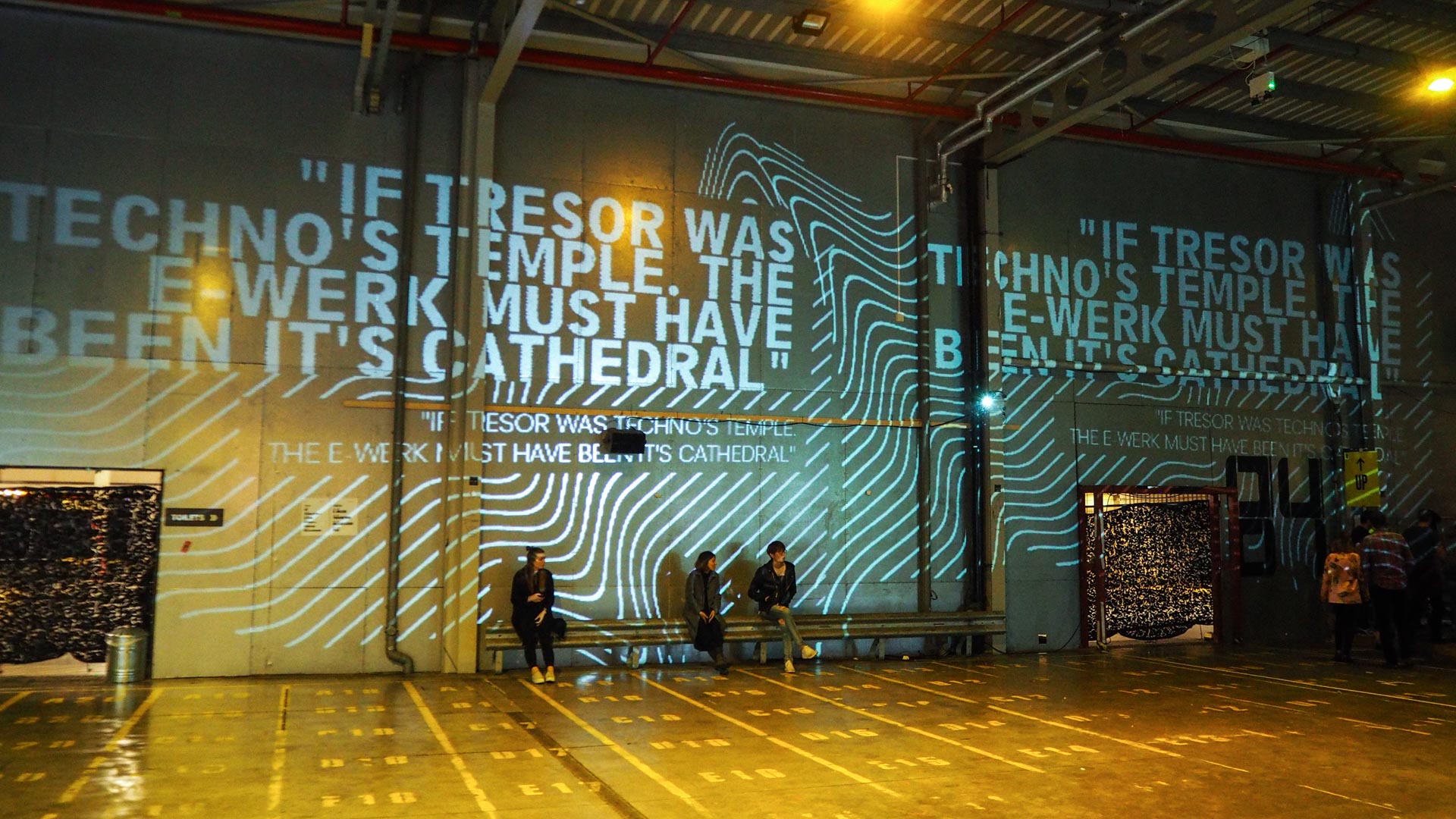
Logo, print and merch followed, plus an exhibition that traveled with the tour: slide and video installations with original photographs by Ben de Biel and Tilman Brems (Zeitmaschine) and a video edit by Varnish RGB. On their way to the dancefloor, fans walked straight past the early nineties. The time travel started in the foyer.
The challenge
A live identity for an artist who never plays the same set twice. It had to fit any venue, rig and strike quickly between cities, and look like nobody else. For Back to the Future, it also had to look like the early nineties without looking like a cheap copy of them. For Parts of Life, it had to do something harder: get out of the way and let his hands do the talking.
One tour showed where the music came from. The other still shows the hands that make it.
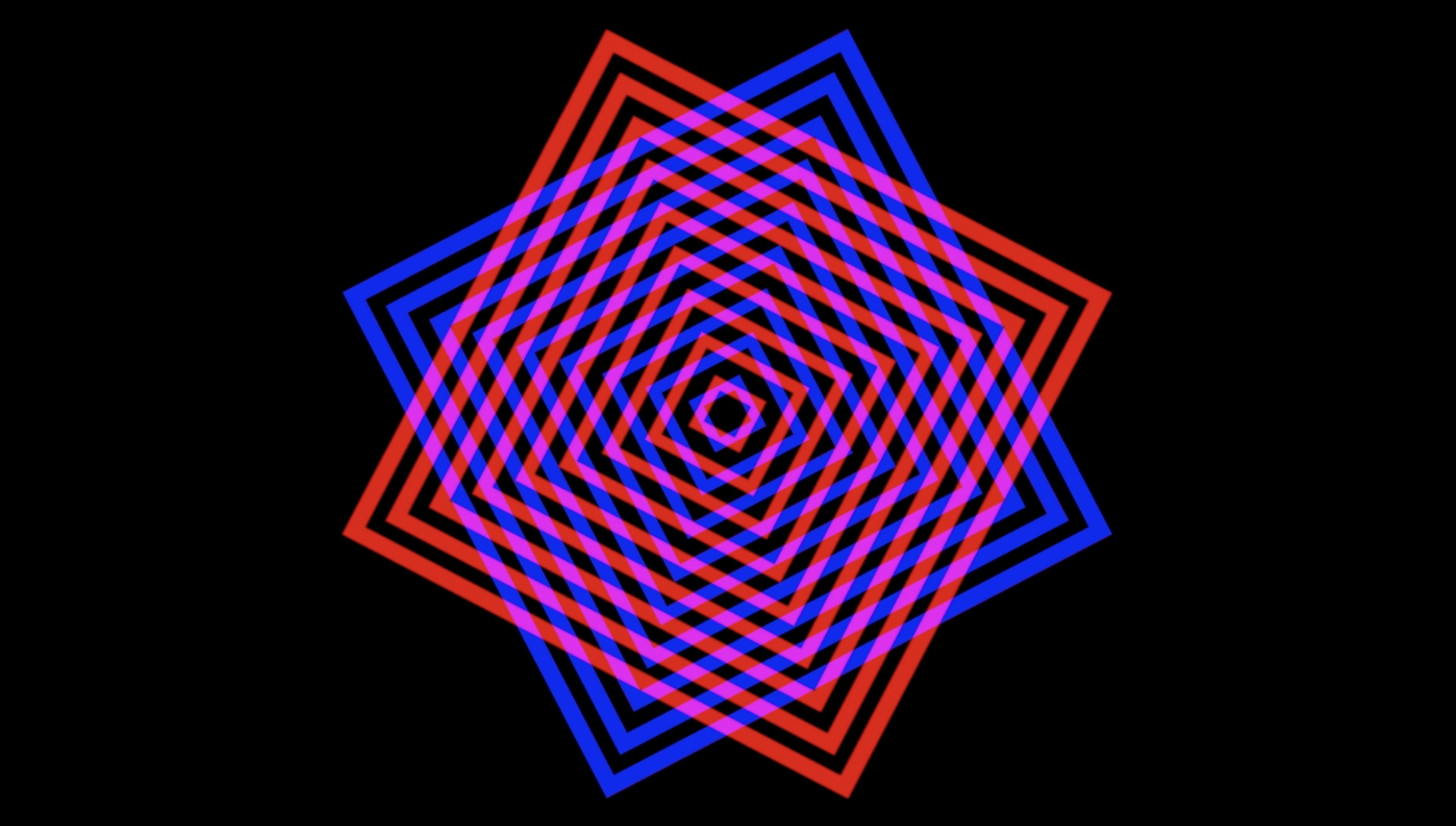
Image carousel
Credits
THE STORYTELLING COMPANY
Concept & Design
Show Identity, Stage Design, Light Installation, Brand Identity, Print and Merchandise by flora&faunavisions (now The Storytelling Company)
Content Production
Live Camera and Effects System, Creative Coding, Motion Design, Video Content, Music Videos Part Three and Part Eight
PARTNERS
Exhibition Photography
Ben de Biel, Tilman Brems (Zeitmaschine)
Video Edit
Varnish RGB