Axel Müller runs TSC’s Project Excellence Center and spends his free weekends in the Alps. In the mountains there is a fixed time at which you turn back, whether you have made it or not. He is not sure we have anything like it at work.
There is a moment early on a ski tour when the snow is still firm and nobody is talking. You hear your skis and you hear yourself breathing. For me that is the best part of the mountains. Not the summit.
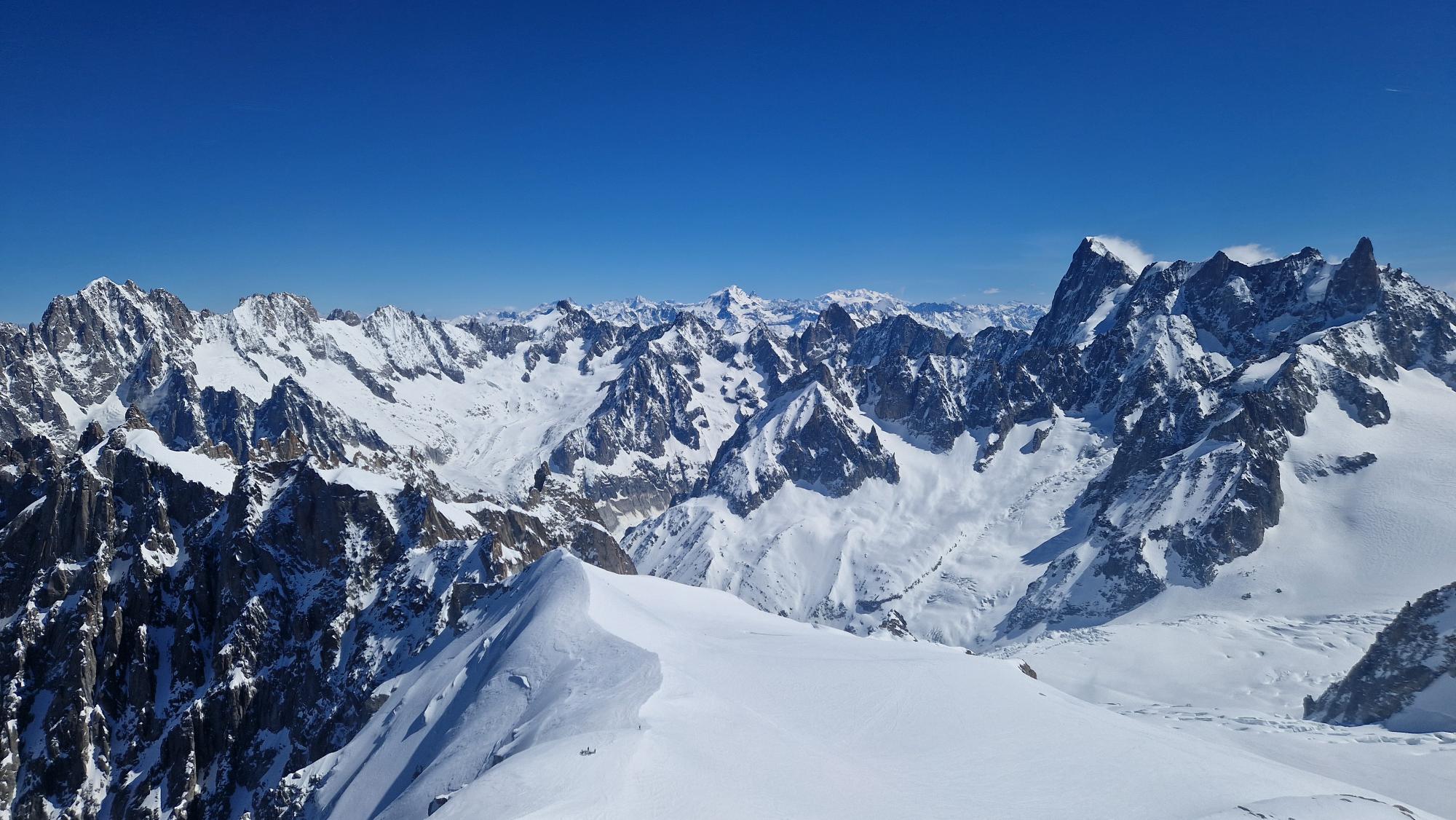
Most free weekends I am outside. Rock in summer, ski touring in winter, and I am slowly working through the Swiss four-thousanders. I have already climbed 18 of the 48, and I have quite a few plans for the coming years. During the week I run the Project Excellence Center at TSC. Together with my team of 10 project managers, we organize up to 50 event projects a year across Europe and worldwide.
I would not have said those two things had much to do with each other. I think that was wrong.
A plan matters. And it’s never quite right anyway.
Every tour starts with a plan. Route, weather window, kit, turnaround time. Every project starts the same way. Run of show, venue, suppliers, build schedule.
The turnaround time is the one people outside the mountains have usually not heard of. You fix a time before you set off. If you are not at the summit by then, you go back down. Not because anything has gone wrong. Because you said so in the morning, when you were still thinking clearly and so that you’ve still got enough time for the way down and don’t run into time trouble.
I found myself in just such a situation this year whilst crossing the Nadelgrat – one of the longest ridge climbs in the Alps at over 4,000 metres, involving a total of four peaks over 4,000 metres. We set off at 2 am and reached the first summit by 8 am – right on schedule up to that point. We’d planned the route to take a total of 13 hours from hut to hut but lost a lot of time on the traverse from the second to the third summit due to a few difficult sections. Shortly before the fourth summit, we decided not to climb it after all, as we were already well behind schedule and very exhausted, so that we could get back to the hut safely.
Good planning matters just as much for an event.
You need clear milestones – what has to be organized or built, and by when. And the moment timing slips, you can't just hope it works out: you must react and replan.
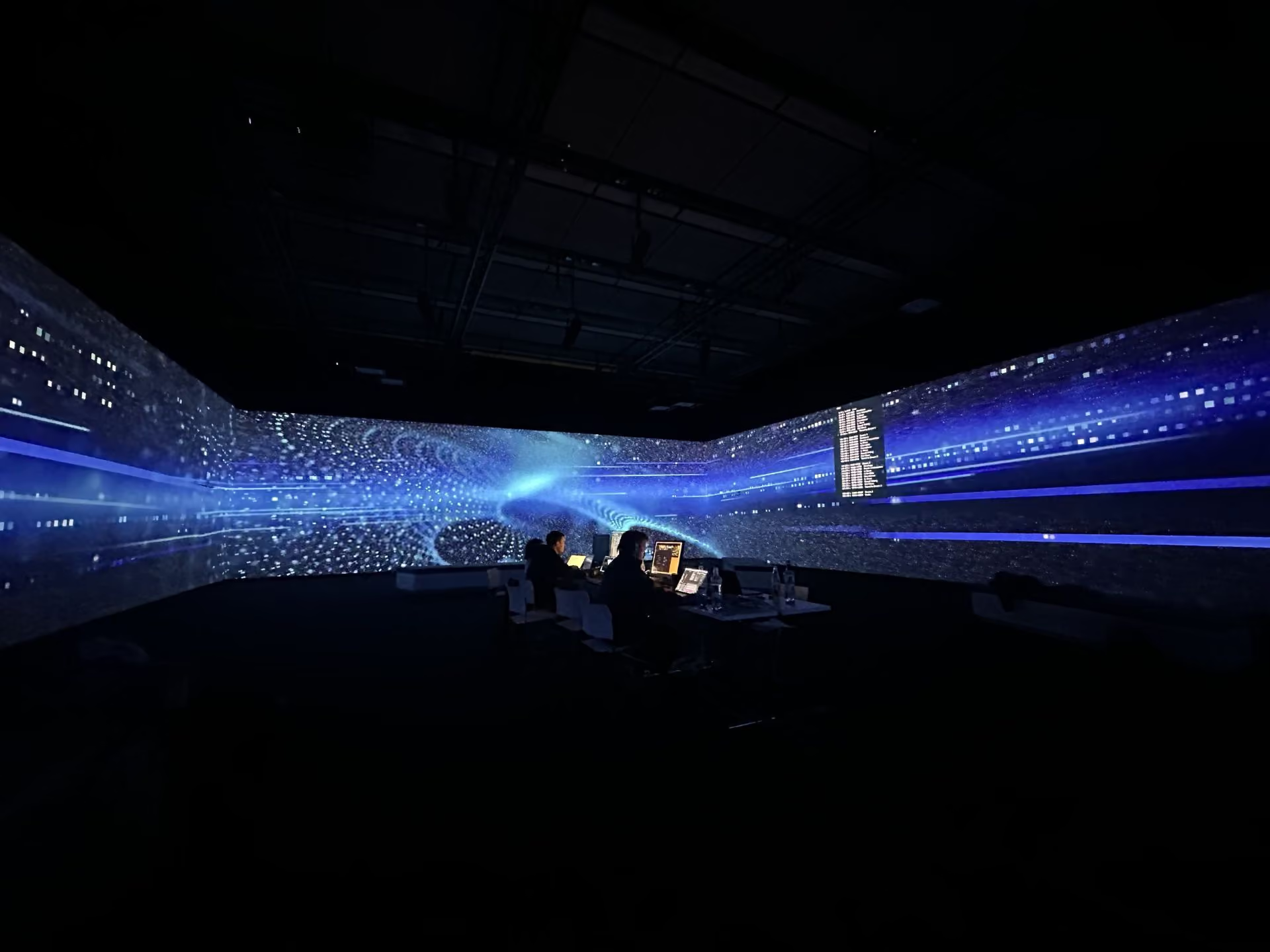
That's why two things are key when timelines change during the run-up: having plan B ready, and being willing to adjust. I still remember an event two years ago for a German car maker. Fairly late in the process, we had to rework big parts of the stage show, because our plans and the real conditions on site simply didn't line up. Because we reacted quickly, the event was still a success in the end – and the audience never noticed that anything had changed.
Being agile doesn’t mean being without a plan.
Whether that counts as planning or as improvising I do not really know. In the mountains nobody asks. You go out with an objective and with alternatives, and one of the alternatives is going home.
The four-thousanders are not a season either. They are a list. Each one has its own window and sometimes the right call is to wait a year.
Big goals happen one stage at a time.
Projects work the same way, only nobody calls it waiting. Some projects run for more than a year – from the very first client meeting all the way to the event itself. In 2025, I helped launch Audi's Racing Legends program, where former race cars were sold so they could return to the track. From the first concept meeting to the kick-off event – and the moment the first car was sold – we spent almost one and a half years on it.
Nothing about it happened in one push. Concept, planning, build, delivery, and each phase only works if the one before it was done properly. That is less dramatic than it sounds. Most of it is people doing the boring parts on time.
The summit is half the job. The other half is getting everyone down.
At an event the show is the part people photograph. But nothing is finished until the last guest is out, the last truck is loaded, and the venue looks like we were never there.
That is when you find out whether it held.
So maybe the useful question is this one. What is our turnaround time on a project or a mountain, and who is allowed to call it. I would find that worth a conversation.
.jpeg)
.jpeg)
.jpeg)








.avif)


