Some people run cultural sites. Michael Couzigou has spent twenty-five years turning them into places you do not want to leave. He just joined TSC’s Originals with a firm conviction about where immersive goes next.
Stand on the stage of the Théâtre Antique d’Orange and the brief writes itself in your stomach. A Roman theater wall, close to two thousand years old, has been doing its job since before most of the languages around it existed. Your task is to make a modern crowd feel something the place has not already produced ten thousand times. Michael Couzigou has spent a career in rooms that intimidating, and learning how to win in them.
He has directed the Théâtre Antique d’Orange and the Arènes de Nîmes, two of the oldest performance spaces in Europe. He co-launched the Atelier des Lumières, the immersive art space that helped turn projection into a destination in its own right. He produced immersive work at Moment Factory. Twenty-five years, four very different scales, and one question he keeps circling.
The question is deceptively simple. When does culture stop being something you look at and become something you are standing inside. It is the line between a heritage site and an experience, between a room you pass through and a room that does something to you. Most of the sector treats that line as a technology problem. Michael treats it as a human one, and he has watched the industry learn the difference the hard way.
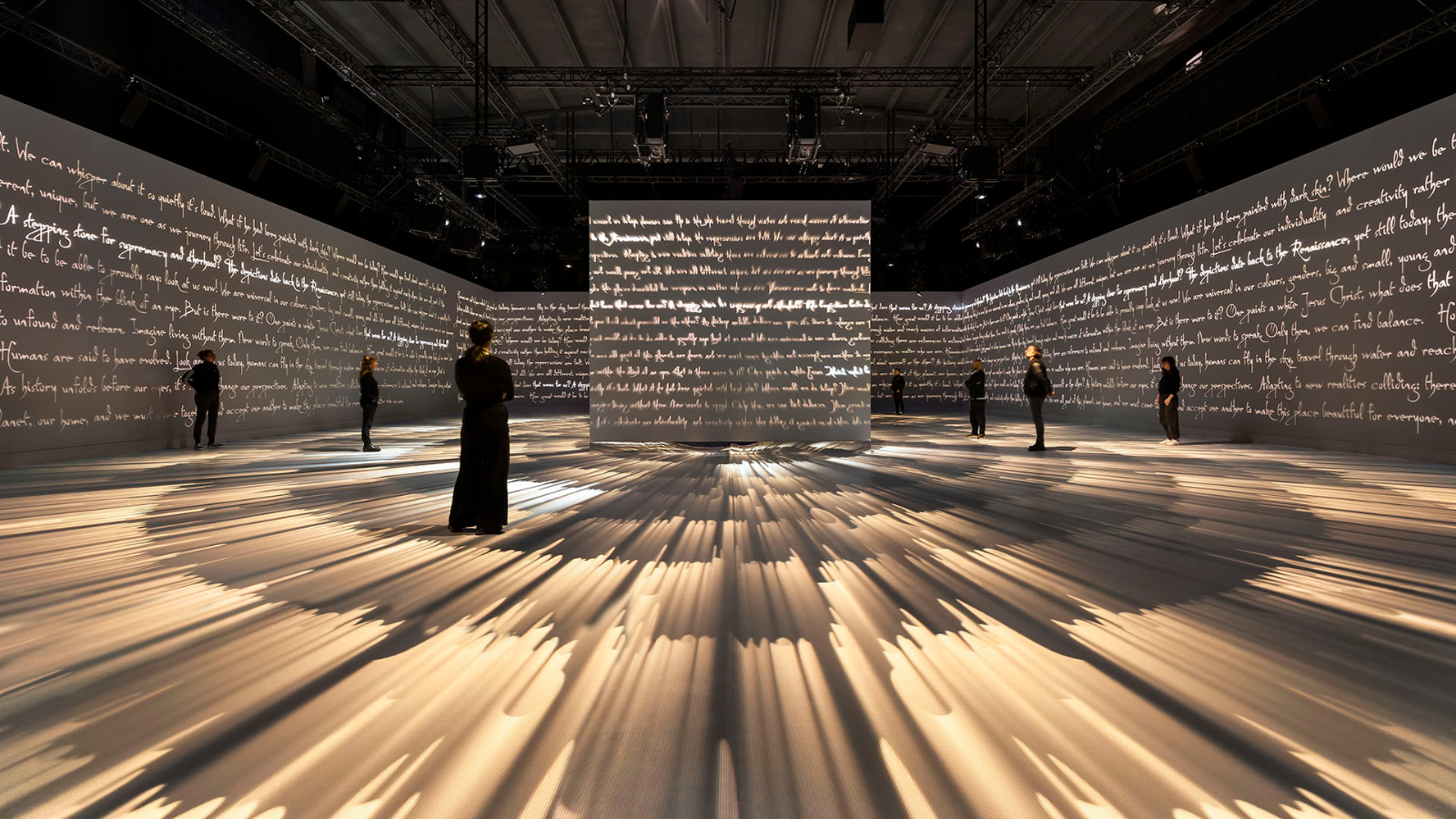
His read on that industry is blunt. Walk into almost any immersive experience of the last few years, he points out, and you can call the opening move before it happens. The room dissolves. Walls turn to water, or starlight, or a swirling Van Gogh. For ninety seconds it is genuinely astonishing. Then the brain files it next to the last three, and the hand reaches for the phone.
The growth is not in doubt. Since 2018, more than four hundred immersive venues have opened worldwide, over a hundred and fifty touring shows have crossed borders, and a market worth around 2.7 billion dollars in 2024 could push toward 30 billion by 2033. But scale changes the physics of wonder, and wonder has a half-life. The first projection-mapped room you ever stand in is unforgettable. The fifth is content. A genre built entirely on the new eventually runs out of new.
“When does culture stop being something you look at, and become something you are standing inside?”
Michael Couzigou, Director of New Business & Partnerships for Originals, TSC
Which is why, in his telling, the old engine has quietly died. How do we make them gasp has been replaced by a harder question: why would they come back. The next decade of immersive, he argues, will not be won by bigger screens or louder rooms or another proprietary pipeline. It will be won by meaning, which is far less photogenic to sell and far harder to fake. Technology, he says, should be "invisible when it needs to be, powerful when it matters, and always in service of the visitor's emotional journey." The moment it becomes the headline, the experience starts aging on opening day.
Da Vinci Genius
You can see that instinct in how he reads other people's work. Visiting Becoming Marilyn Monroe in Zurich recently, he walked straight past the icon and talked about Norma Jeane instead. "Behind the myth," he says, "a woman searching for her own truth." That is the reflex: find the person, or the place, underneath the spectacle, because that is the part an audience actually carries home.
That same question, it turns out, is the whole of Originals, the part of TSC that does not wait for a brief. This is where the company makes its own worlds and sends them out to travel the planet under their own power, owned and licensable, made to move an audience in one city and then the next.
Which is precisely where Michael now sits, as Director of New Business & Partnerships for Originals. The brief, more or less: find the next cities worth entering. Work out where in the world a format like Vikings or Marilyn belongs next, who should host it, and what it takes to land it there.
It sounds like a sales role. It is closer to matchmaking. A touring original is not a product you push into a market. It is a guest you place with the right host, in the right building, at the right moment in a city’s appetite. Get the match wrong and a brilliant format dies in a half-empty hall. Get it right and it becomes the thing a city did not know it had been waiting for.
The job needs two things rarely found in the same person. A producer's grasp of how an experience is actually assembled, beat by beat, and a host’s gift for the room. Anyone who watches him work spots the second one instantly. He is the one thanking everyone by name, wiring one half of a conversation to the other, treating a sector as a set of people rather than a market. In a business about belonging, that is not a soft skill. It is the skill.
Twenty-five years in, the questions have not changed. Why does this matter. Why would I come back. Now he gets to ask them of whole new cities.





.avif)

