When Microsoft asked us for our emissions all the way back to 2019, we had no system, no experience and a mountain of receipts. Three years later, other companies call to ask how we did it. Here’s what we learned and what gave us a head start we never saw coming.
11,000 Invoices, One Cessna and a Lot of Gaffer Tape
In 2023, planworx GmbH, one of the agencies that now make up The Storytelling Company, got the request every Microsoft supplier eventually gets: show us your carbon footprint. Not just this year’s. Microsoft wanted the full picture across Scopes 1, 2 and 3, with 2019 as the baseline year, as part of its push toward its 2030 climate goals.
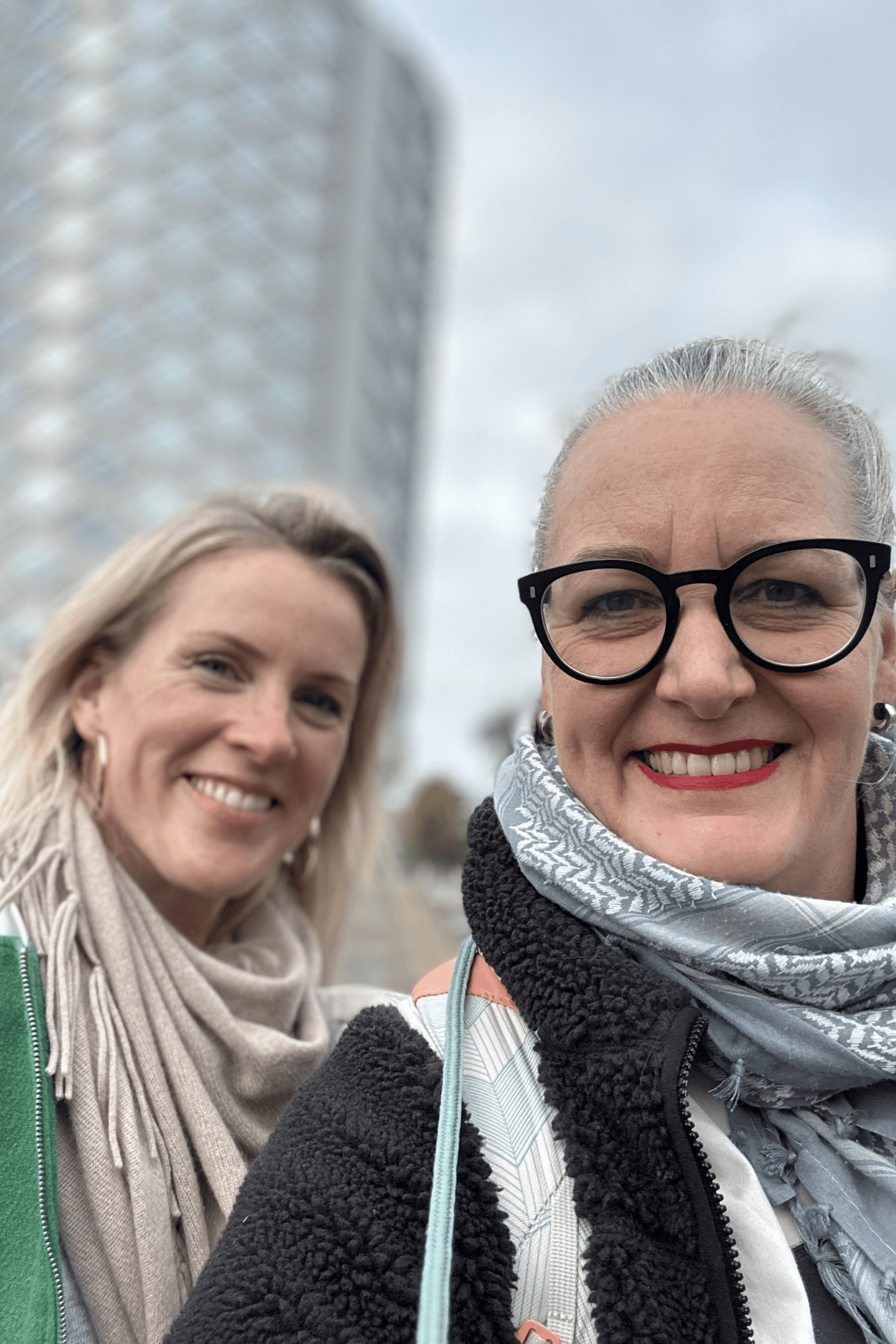
Sophie Blockus & Barbara Negele, ESG team The Storytelling Company
Fair ask. Big client, ambitious targets, and frankly the right thing to do. There was just one tiny problem. Sophie Blockus and I were the two people tasked with making it happen. Sophie is our ESG, DEI & Culture Manager, short for environmental, social and governance plus diversity, equity and inclusion. We were both curious about sustainability reporting but brand new to it. And the data we had to work with was anything but tidy.
Quick crash course, because we needed one too. Scope 1 is what a company burns itself, like the fuel in its own vans. Scope 2 is the energy it buys, like the electricity that keeps the office lights on. Scope 3 is everything else along the value chain, from the gaffer tape we order to the hotel room a freelancer sleeps in. For an agency like ours, Scope 3 is where the real story is.
Here’s the thing about a live marketing agency: no two invoices look alike. Our transactions ranged from buying and installing an old Cessna to booking racecourses, from rolls of gaffer tape to DJ fees. Add it all up and you get roughly 11,000 annual invoices, each one carrying its own little slice of emissions.
“Two event people, brand new to sustainability, staring at a request and asking ourselves: wait, how many invoices? We definitely had our dark moments.”
Barbara Negele, Creative Strategist The Storytelling Company
You don’t process 11,000 invoices with pen and paper. You don’t really do it with a spreadsheet either, at least not if you’d like to sleep again.
The dead-end tour
So, we went shopping. The market for carbon accounting tools was full of promising options, and we looked at plenty of them. But again and again we hit the same wall. Most were built for manufacturers or companies with a clearly defined product portfolio: raw materials in, products out. Our world of one-off builds, temporary venues, travel, rentals and freelancers simply didn’t fit their boxes.
Demo after demo, the frustration grew. And the deadline didn’t move, as Sophie remembers the search for a tool that actually fit:
“Slowly a fair bit of panic started to creep in. How on earth were we supposed to get a grip on all these numbers in the very limited time frame we were given?!”
Sophie Blockus, ESG, DEI & Culture Manager The Storytelling Company
A tip from a friend Help came from an unexpected corner. Our information security and compliance consultants at NEXTWORK pointed us to a young Munich startup called Footprint Intelligence and its AI-powered carbon accounting platform.
From the very first call, it felt different. Founders Daniel Scholz and Sebastian Gier didn’t flinch at our Cessna. They got curious about it. Instead of squeezing us into a template, they wanted to understand how an agency like ours actually works.
Order from chaos The platform took on the heavy lifting we never could have done by hand. Its AI worked through thousands of wildly different invoices and helped map them to the right emission categories and scopes. With more than 150,000 emission factors from established sources such as Ecoinvent, Exiobase and DEFRA, even highly heterogeneous transaction data can be processed in a structured and robust way.
But the real gift was less obvious. We had to channel our inner CSI agents: Where does this data live? Who owns it? What belongs and what doesn’t? The work pushed us to take a hard look at how we capture and store information across the business, and to finally bring some order to it. That discipline now pays off far beyond carbon reporting.
A head start we didn’t plan for Being pushed by Microsoft felt like pressure at the time. Looking back, it was a gift. Many businesses in the marketing and event sector are only now starting to measure their emissions. We already have years of data and a process that works, and it played its part in our EcoVadis Platinum rating. In July we wrote that we’d rather be marked than taken at our word. Being marked starts with counting. And counting surprised us.
The Cessna problem Ask people where an event agency’s emissions come from and most will say flights. Honestly, so did we. The invoices disagreed. Purchases and assets, everything we buy, build and rent, Cessna included, make up 79% of our footprint. Internal business travel? Roughly 10,5%.
That’s the Cessna problem. In a business where most things are built once, for one moment, the footprint sits in the stuff, not in the seats. It also shows us where the biggest levers are: in what we build, rent and ship. Travel still counts, of course. Our fast-growing US team now covers a lot of work that used to mean a transatlantic flight.
The next big challenge Now things get interesting. Since 2026, we no longer work as separate companies. We work as one brand and one company: The Storytelling Company. Our carbon accounting is following suit. Until now, it covered planworx. Starting with business year 2026, Purple Digital Storytelling, ProSystems International, flora&faunavisions and our US office join in.
That means new teams, new systems, new kinds of invoices and a whole new continent of data. It’s a big step, and a bit of a scary one. But we’ve done the hard part once before, and this time we’re not starting from zero. We’re starting with a proven process and a reliable platform partner right behind us.
“We used to do all of this in Excel. Lots and lots of Excel. Going AI-supported for ESG shows where TSC is heading with regards to AI adoption. Doing it together, across every TSC location, shows another important thing: we’re growing together, as one company.”
Bart Nieuwenhuizen, Chief Financial Officer The Storytelling Company
The rollout across The Storytelling Company won’t be a walk in the park. But we’ve been here before, with more lessons behind us than we’d like to admit (some more welcome than others). Sophie Blockus puts it like this: “This is still slow, unglamorous work that can be very frustrating now and then. At the same time, it’s hugely rewarding to see our detective work pointing us to the most effective levers towards being a truly sustainable company. Also, it lays the foundation for our next big goal: science-based targets validated by the SBTi. Onwards and upwards!”
What we’d tell the next caller Start with your data, not your tool. Before you sign anything, find out where your numbers live and who owns them. A tool can only sort what you can find. Pick a tool built for messy, one-off transactions. If the demo starts with raw materials in and products out, it wasn’t built for you.
And don’t trust your gut on where your emissions sit. Ours pointed at flights. The invoices pointed at everything else.
Three years ago, we couldn’t tell Scope 1 from Scope 3. Now people call us to ask. Not bad for two carbon newbies.









.avif)


